


Outdoor Escape Game in Berlin: Is It Worth the Price?
It’s the weekend, and whether you’re already in Berlin or just planning your trip, budget is never far from the question of what to do. Alone, with family, or with friends, you have to juggle everyone’s wishes and budgets. These constraints, on top of limited time, naturally narrow your options, and every euro spent needs to count. That’s even more true when you’re choosing a “premium” activity, where the price often runs above €50. So how do you pick an activity in Berlin that’s genuinely worth the price, and what should you weigh before making your decision? Here are a few pointers.
How Much Does an Outdoor Escape Game in Berlin Cost?
There are plenty of outdoor escape games in Berlin, and they don’t all offer the same experience. While the end goal is the same, having you explore Berlin by solving puzzles, the prices and what you actually get for them vary quite a bit. In most cases, pricing is set per participant, with the cheapest options starting around €7 per person and going up to nearly €30 depending on the experience.
In our case, The Nefertiti Affair costs €79 flat, whether you’re 2 or 6 people, you’re paying for the experience, not per person. You can probably guess that a price difference like that comes with a different kind of offering. We won’t comment on what others do, since we don’t know the details of what they offer, but we can tell you exactly why we chose a single flat rate. At OUTscape, we believe The Nefertiti Affair should stay The Nefertiti Affair, no matter the size of your crew. Our outdoor escape game always includes 2 investigations, the same number of puzzles to solve, 4 hours to solve them, and a game master present both at the start and the end.
Our Vision: A Maximum Experience for a Minimum Price
When we created The Nefertiti Affair, we wanted to take everything that makes escape rooms so successful and adapt it to the scale of an entire city. While we wanted to keep what we loved most about escape rooms, we also wanted to avoid what we dislike most about them: the price. To be clear, as we explained in our article Outdoor Escape Game vs Escape Room, we fully understand the price gap between the two activities. That said, it doesn’t stop us from thinking that paying over €100 for one hour of play is excessive. So we chose to build a longer game, one that lets you explore a large part of Berlin Mitte, for €79. The clues that move you forward aren’t hidden in an app, but in a mysterious sealed bag, and that different approach is also part of what justifies the €79 price. You can find all the details behind these design choices in our article on creating an outdoor escape game.
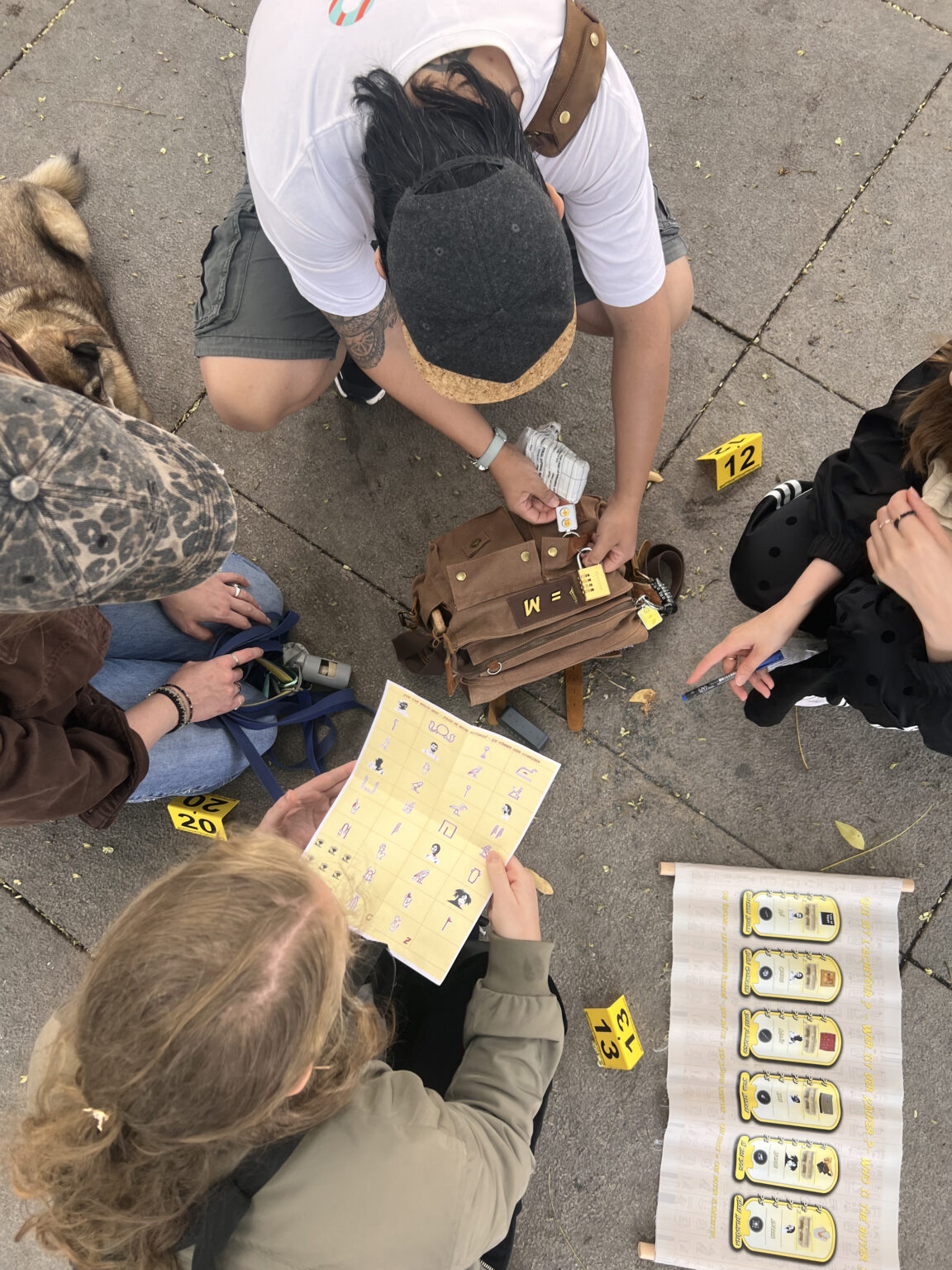
The OUTscape Berlin Guarantees
For smaller budgets, or if you’re playing solo or as a duo, our €79 outdoor escape game might feel like a stretch, and we get that. Get in touch with us if there are two or three of you, and we’ll set you up with a personalized promo code. It would genuinely be a shame to visit Berlin without solving The Nefertiti Affair. To put it in perspective, we’d say that for €79, up to 4 hours of play, a scavenger hunt with no app involved, and a game master reachable throughout your entire adventure, the value for money is guaranteed 100%. On top of that, if you feel like taking your time and stopping at a terrace or a restaurant along the way, that’s entirely possible too. And to wrap up: no hidden fees, ever.
What Do Players Who Solved The Nefertiti Affair Have to Say?
Now that we’ve covered the perks and guarantees OUTscape brings you, let’s get to the real reason to book our scavenger hunt in Berlin. The Nefertiti Affair is an excellent scavenger hunt, and 18 five-star reviews don’t lie: this page sums up what our customers actually think of the game.
What players love is that you have to use the city itself to move forward: countless details on facades, signs, and walls hold the answers to the puzzles. We’ve often been told the gameplay felt perfect and original. One customer once told us: “You’re really very resourceful.”
Honestly, we wish that were entirely true. The reality is that we simply put in a lot of work to offer the best possible game for exploring Berlin.
Conclusion
By now you’ve probably gathered it: €79 to solve The Nefertiti Affair is a real amount of money, sure, but it’s not expensive. That price covers your entire team, gets you two investigations to solve, and gives you 4 hours to be the detectives who return their queen to the people of Berlin. The design and originality of the materials alone are worth the price tag. Offering you a rate this attractive was a deliberate choice on our part. And don’t forget, if there are only two or three of you and you’d like a better rate, just reach out, we’ll work something out. We hope these few lines have helped justify our price, and above all, the value of The Nefertiti Affair.
Frequently asked questions
Yes, 100%. Once your booking is paid, we won’t ask you for any further payments. An automatic email confirms your reservation, and that’s it. €79, not a cent more.
Yes, completely. Payments are processed through a Stripe link on our website. The transaction is encrypted and secure.
In line with our terms and conditions, you can cancel up to 24 hours in advance and get a refund. If the investigation is cancelled due to bad weather, a refund may also apply, in accordance with our terms and conditions.
The price includes a game master who welcomes you at the start and collects the equipment at the end. You can reach them at any time if you need help.
Payment is made online at the time of booking, it’s not possible to pay in person on the day.